
Case Study
Breakthrough in Paper Recycling: Boosting Fiber Recovery Rates by 19%
Industries- Manufacturing
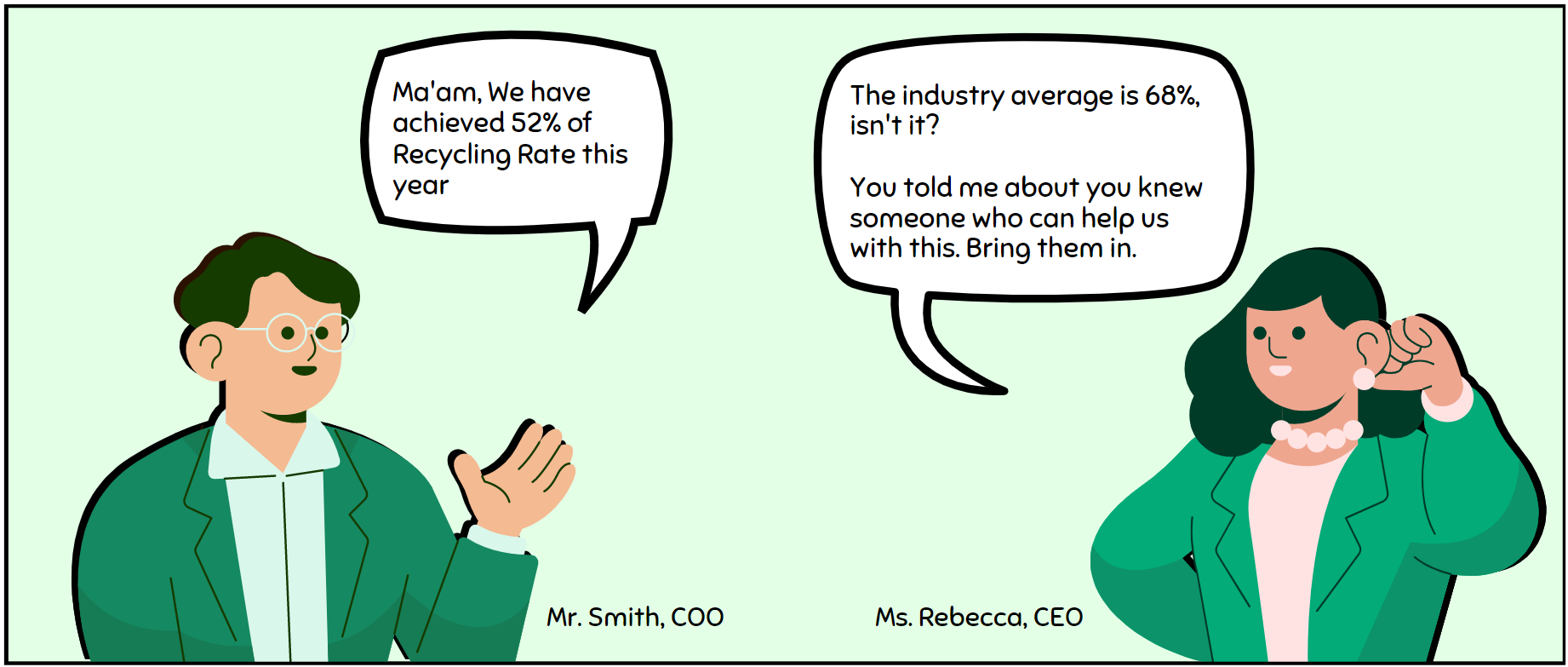
The paper industry is valued at 357 billion USD and is expected to grow at a CAGR of 0.72%. This Industry is projected to reach 372 billion USD by 2028. Notably, the industry has achieved a remarkable recycling rate of 68%. The industry is already losing millions of dollars in inefficient operations. The use of recovered fiber has a significant impact, including cost-cutting measures, such as reduced water, chemical and energy requirements. This can ultimately lead to increased profit per ton of paper.
Problem Statement:
To Increase recycle rates and fiber recovery rates from used paper by employing data warehousing and data analysis techniques.
Expected Outcomes:
- Developing an effective analytical technique to pinpoint the problem area.
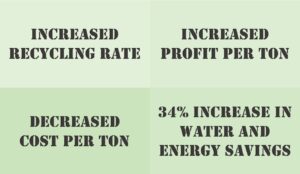
- Aiding in impactful decision making to increase the recycling rate.
- Saving about 133,000,000 more gallons of water and 33,000,000 more kWh of energy year on year when compared to the current efficiency.
Data Required:
| Sl. No | Data Point | Source |
| 1 | Amount of Used Paper | Inventory management module of an ERP |
| 2 | Shredding Efficiency | KPI |
| 3 | Amount of Chemicals, Water and Energy Required | Inventory management module of an ERP |
| 4 | Total Pulp Recovery Rate | KPI |
| 5 | Amount of Recovered Fiber | Calculated from ERP Data |
| 6 | Production Efficiency | KPI |
| 7 | Recovered Rate at each stages such as Pulping, Cleaning and De-inking | KPI |
KPIs identified:
Recovery Rate = Tons of Output Recovered / Tons of Input
In each stage the recovery rate was calculated to find the efficiency and to compare them at each stage.
Shredding Efficiency = Shredded Output / Tons of Used Paper
Shredded Efficiency was used to confirm this was the problem in the given case.
Production Efficiency = Total Output in Tons / Tons of Fiber Used
Production efficiency will be used to compare the production before and after the implementation of the solution
Steps Towards Solution:
If a company TIC Paper Ltd was processing 10,000 tons of recycled paper every year and the recycled paper output was just 5,222 tons then the recycling process of used paper involves the following steps:
- Pulping
- Cleaning
- De-inking
- Papermaking and Output
The industry standard efficiency at each stage is around 85% to 90%. This results in a total recycling rate of 68%. The data collection and warehousing was done in each step. Recovery rate at each stage was calculated.
The recovery rate in pulping was found to be only 69% and the remaining steps were in par with industry standard.
Pulping stage includes shedding of the paper, screening, mixing chemicals, separation, and refining. The data collection and warehousing was repeated across all the steps in pulping. The shredding output was found to be 70% which was the reason behind the low recycling rate
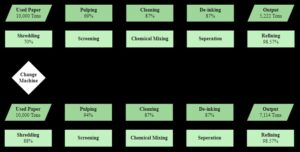
Our team analysis suggested that the shredding machine should be changed to increase the efficiency of this stage. A new shredding machine would increase the recovery rate around 90%. When performing a cost benefit analysis, a new shredding machine would increase the cost savings by 36%.
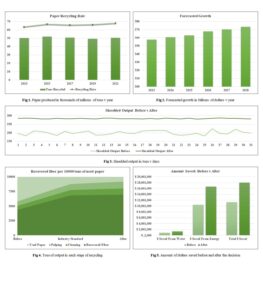
Dashboard for Chief Operating Officer
Immediate Benefits:
- Enhancing the shredding process to 94% boosts productivity, reduces costs, streamlines workflows, and improves performance.
- Implementing a new shredding machine leads to immediate cost savings, enhancing short-term profitability and financial stability.
- Demonstrating efficiency and sustainability positively impacts the company’s reputation, brand image, and fosters trust from customers, partners, and stakeholders.
Long-term Benefits:
- Annual cost savings of $3,457,410 per 10,000 tons of shredded paper contribute to long-term profitability, stability, and allow for reinvestment in growth and innovation.
- Significant energy and water savings per 10,000 tons of shredded paper demonstrate the company’s enduring commitment to sustainability and position it as an environmentally conscious organization.
- Cost savings per ton of shredded paper provide a sustained competitive edge, enabling lower prices, increased investment in R&D, and exploration of new business opportunities for continued growth and market leadership.
Conclusion:
With the help of data analysis and warehousing solutions built on GroundZero Unified Data Platform, the company was able to make effective decisions, resulting in an increased recycling rate and reduced costs. This, in turn, led to a higher profit per ton of recycled paper produced.